Data updated October 12, 2026 · All 58 Counties
California Bank-Owned Homes (REO) List
As of October 12, 2026, California has 42,772 foreclosure-acquired properties on record across all 58 counties.
This list tracks foreclosure-acquired properties: homes whose most recent recorded sale was a trustee's deed or deed-in-lieu, with no arms-length resale recorded since. That includes true REO — properties that reverted to the lender at auction — alongside investor purchases at trustee sale that have never resold. A recorded-document list finds these properties the day the deed hits the county record, not when an agent eventually lists them.
Search These 42,772 Bank-Owned Properties
7-Day Free Trial · No Credit Card Required · One-Click Sign-In With Google
The Profile
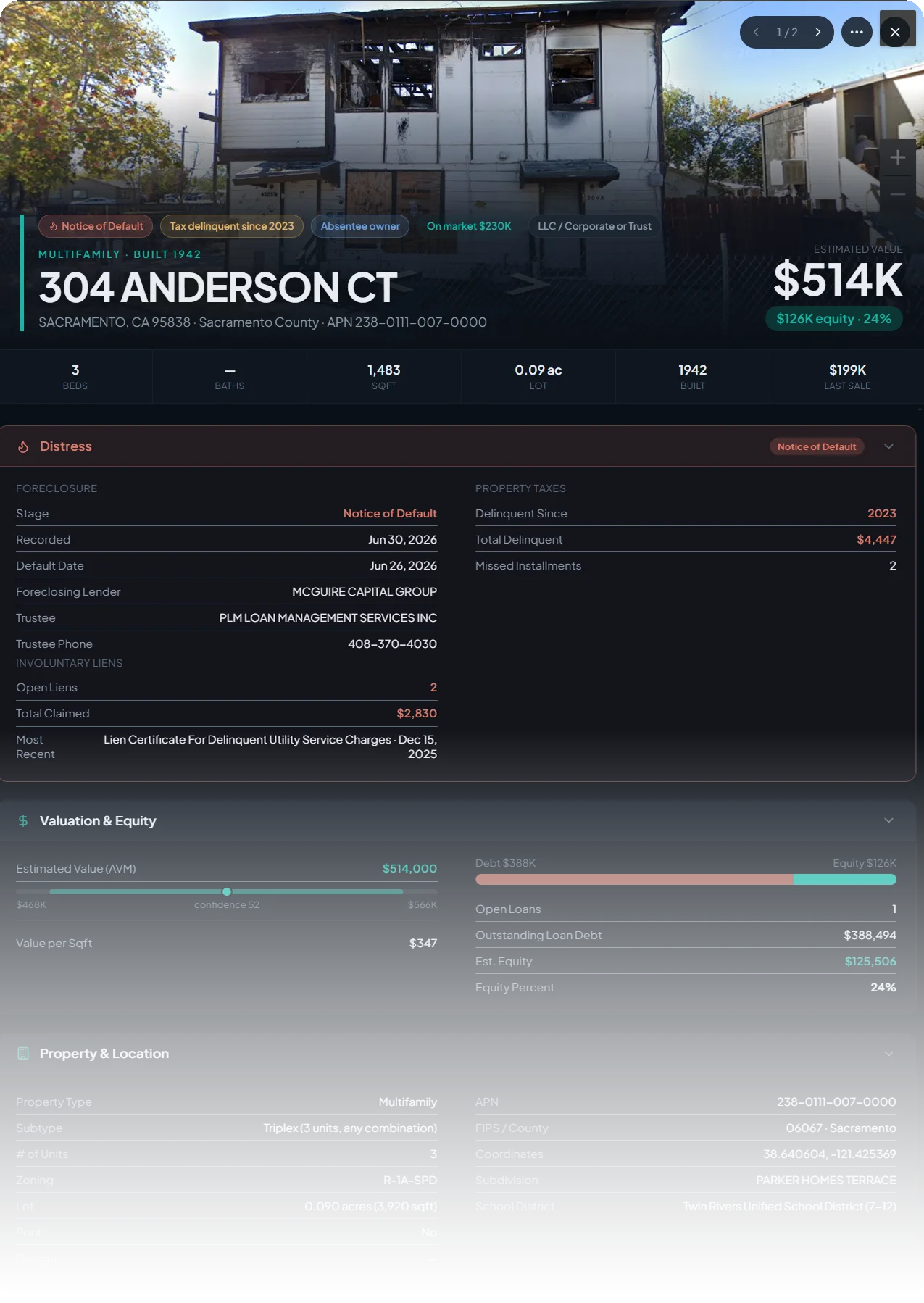
One click. The whole picture.
The full foreclosure pipeline
Every notice of default and trustee sale, statewide. Auction date, time, location, opening bid, and the trustee's phone number.
True equity
Valuation minus every open loan on record, estimated balances included. Filter for the equity range your strategy needs.
How California's Numbers Are Moving
Change over the past week (since October 6), from Properant's daily snapshots of recorded county documents. The series grows every day.
What's on Every Property Record
Every REO on the list shows which lender took the property back and when, the foreclosure history that led there, prior recorded debt, and the parcel's full profile — so you can approach asset managers about inventory that isn't on the market yet.
How A Home Becomes Bank-Owned In California
Almost every California foreclosure ends at a trustee sale, and the foreclosing lender opens the bidding there with a credit bid — roughly the debt owed plus costs. If no third party outbids it, title reverts to the lender through a trustee's deed upon sale, and the home becomes REO: real estate owned. That deed is a recorded county document, which means the exact day a home turns bank-owned is public information — usually weeks or months before an asset manager assigns it to a listing agent and it surfaces anywhere buyers browse. The same recording also names the lender who took it back and the debt it was carrying, which is the starting point for valuing the deal.
Finding Bank-Owned Homes Before They Hit The Market
Portals can only show bank-owned homes once someone lists them. The recorded trustee's deed shows them the day the auction reverts — and that gap is the whole opportunity. Working from recordings, you can watch which homes reverted this month, which lender holds each one, and reach out about inventory that has no listing, no photos, and no competition yet. The list also carries trustee-sale purchases by investors that have never resold — reversion-adjacent inventory whose owners bought to flip and may sell wholesale. Pair either group with the equity and loan history on each parcel's profile and you're negotiating from the recorded numbers, not the asking price.
REO, Foreclosure Auction, Pre-Foreclosure — Three Lists, Three Strategies
These stages reward different buyers. Pre-foreclosure is an outreach game: the owner still controls the home and a sale can still solve their problem. The foreclosure auction is a bidder's game: cash, courthouse steps, and a hard date. REO is a negotiation game: the emotional seller is gone, and the counterparty is an institution holding a non-performing asset it never wanted. California runs all three stages through recorded documents, so each list stays current as filings and deeds record — pick the stage that fits your capital and timeline.
California Pre-Foreclosure Homes & Listings →Frequently Asked Questions
How many foreclosure-acquired properties are there in California?
Properant tracks 42,772 foreclosure-acquired properties across California's 58 counties as of October 12, 2026, counted from recorded county documents with releases and cancellations removed.
Are REO properties cheaper than regular listings?
Often, but not automatically. The advantage of tracking REO from recorded documents is timing: you see reversions when the trustee’s deed records, before the property is listed, priced, and competed over.
Can I download the bank-owned homes (reo) list?
Yes. Inside Properant you can filter by county, city, equity, owner type, and every other signal, save the list, and export it — or upload your own list and let the platform match and enrich it. The trial is free and requires no credit card.
Build Your Bank-Owned Homes (REO) List in Minutes
This page is one slice of it. Properant connects every parcel in California to its owner, open loans, liens and foreclosure stage — then scores and skip-traces the ones worth calling.
Want to search these 42,772 bank-owned properties?
Explore the live California bank-owned database in Properant.
See the Live List→7-Day Free Trial · No Credit Card Required
Top California Counties
| # | County | Count | Share of Statewide |
|---|---|---|---|
| 1 | Los Angeles County | 8,620 | 20.2% |
| 2 | Riverside County | 5,490 | 12.8% |
| 3 | San Bernardino County | 4,522 | 10.6% |
| 4 | Orange County | 2,400 | 5.6% |
| 5 | San Diego County | 1,946 | 4.5% |
| 6 | Sacramento County | 1,901 | 4.4% |
| 7 | Fresno County | 1,513 | 3.5% |
| 8 | Kern County | 1,371 | 3.2% |
| 9 | San Joaquin County | 1,169 | 2.7% |
| 10 | Contra Costa County | 1,147 | 2.7% |
| 11 | Alameda County | 1,022 | 2.4% |
| 12 | El Dorado County | 957 | 2.2% |
| 13 | Stanislaus County | 857 | 2.0% |
| 14 | Solano County | 784 | 1.8% |
| 15 | San Francisco County | 577 | 1.3% |